Turning Uncertainty Into Advantage: How AI Is Reshaping Strategy for Medical Device Companies
Economic uncertainty has always tested the resilience of medical device companies. Tariff volatility, supply chain disruptions, shifting reimbursement landscapes, and tightening capital markets don't pause for product roadmaps. But something has changed. The companies navigating this environment most effectively aren't just cutting costs and waiting it out — they're using AI as a strategic instrument to hedge risk and position for accelerated growth when conditions stabilize. As a business strategist with over three decades of executive experience in the life science and medical technology sectors, I've found myself navigating the dotcom bubble, 9/11, The Great Recession and the COVID-19 Pandemic. My career can be described as a series of economic upheavals broken up by short periods of stability. One hones one's adaptability under such volatile conditions!
Here's how using AI to improve financial performance looks in response to our growing headwinds.
Forecasting Demand with Greater Precision
Traditional demand forecasting in medtech has relied on lagging indicators — distributor sell-through data, historical procedure volumes, and/or rep-reported pipelines. During periods of economic disruption, these signals become unreliable fast. Procedure deferrals, hospital budget freezes, and shifts in care settings can make last quarter's data almost useless.
AI-powered forecasting models ingest a broader, faster-moving data set: macroeconomic indicators, CMS reimbursement trends, hospital financial filings, competitor pricing signals, and even physician sentiment from published literature and conference activity. The result is a more dynamic view of demand — one that lets commercial and supply chain teams respond in near real-time rather than react after the fact. That kind of precision translates directly into lower inventory write-offs, better allocation of field resources, and more defensible sales forecasts to present to the board.
Strengthening the Supply Chain Before It Breaks
The past several years have exposed just how fragile single-source supplier relationships and offshore manufacturing dependencies can be. AI doesn't eliminate that fragility, but it gives companies far earlier warning that a disruption is coming.
Predictive risk monitoring tools now scan thousands of external signals — geopolitical news, port congestion data, supplier financial health indicators, climate event tracking — and surface supply chain vulnerabilities weeks before they become operational crises. For a medical device company, that lead time can mean the difference between a missed quarter and a proactive supplier pivot. Perhaps more immediately actionable, AI can also accelerate the supplier qualification process, compressing a step that once took months into weeks — critical when you need to move fast (and looking to save costs). This is ideal for developing secondary and tertiary sources before their needed.
Prioritizing R&D Investment Under Constraint
When capital is scarce, the question of where to invest in innovation becomes existential. AI is changing how medtech leaders answer it. Machine learning models applied to clinical literature, patent databases, regulatory approval patterns, and payer coverage decisions can identify where the convergence of clinical need, regulatory feasibility, and reimbursement probability is strongest. That's not replacing human judgment — it's sharpening it. Companies that use these tools are making higher-confidence bets on their pipeline and deprioritizing development programs that face long odds in the current environment.
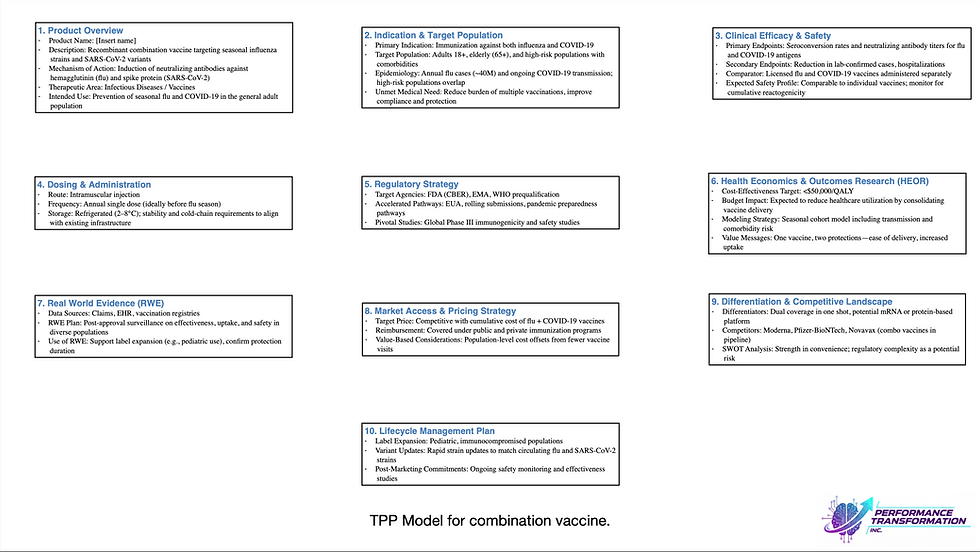
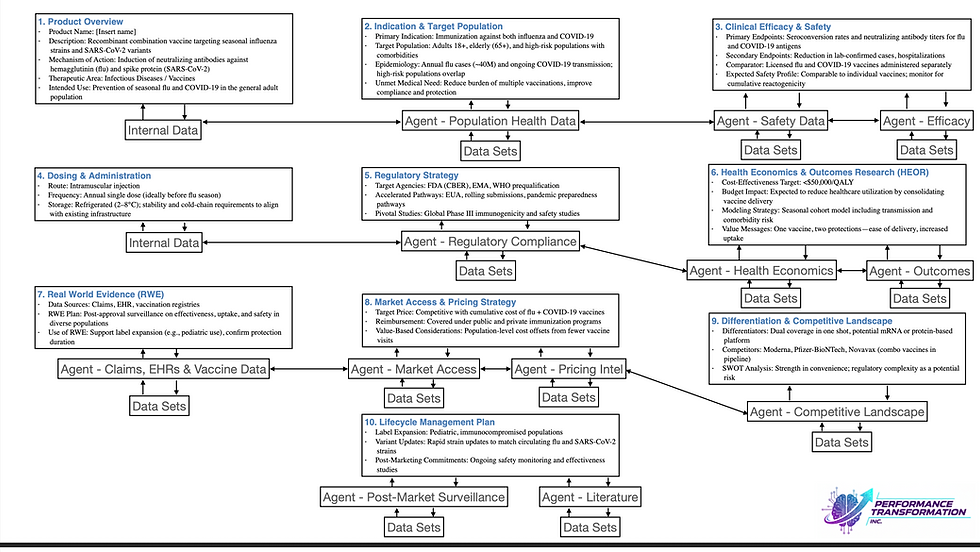
Medtech can take a lesson from biotech in this regard. Companies developing therapeutics commonly use a strategic tool referred to as the TPP, or Target Product Profile. The TPP is a single page assessment of the variables that may impact the commercialization pathway for an asset under development. Using AI, one can greatly facilitate the creation of these kinds of decision documents and keep them up to date over time.

The Strategic Posture That Separates Leaders from Laggards
Economic downturns are ultimately sorting mechanisms. The medical device companies that emerge stronger are those that use constrained conditions to build capabilities their competitors didn't — leaner operations, sharper commercial targeting, more resilient supply networks, and a portfolio shaped by data rather than intuition alone.
AI is the lever that makes all of that possible at speed and scale. The question for leadership teams isn't whether to adopt it. It's whether they're moving fast enough to matter.
Performance Transformation is an 18 year old boutique consultancy that seamlessly integrates the talents derived from The Human Continuum and AI. Our experience with Big Data projects dates back to 2009 (Bell Labs & UPMC) and we have continuously maintained a leadership position in the use of machine learning, Big Data and Artificial Intelligence. For more information on how we can help your company transition into this new set of competitive drivers, please reach out to terry@performtransform.com.
© 2026, Performance Transformation, Inc.


keonhacai tv dạo này mình thấy nhiều người nhắc nên cũng tò mò bấm vào xem thử, chủ yếu xem giao diện chứ không đào sâu nội dung. Ấn tượng đầu là bố cục nhìn khá thoáng, kiểu chia thành từng khối rõ ràng nên lướt một vòng là biết mình đang ở đâu. Mình thích nhất là phần menu đặt dễ thấy, bấm qua lại giữa các mục không bị vòng vèo hay rối, cảm giác dùng nhanh gọn. Thông tin hiển thị theo dạng cột và danh sách nên mắt mình bắt chữ khá nhanh, không bị nhồi nhét quá nhiều thứ cùng lúc. Nói chung chỉ cần vậy là đủ để mình nắm được cách họ sắp…
Mình chơi xổ số kiểu cho vui là chính, xem như một thói quen giải trí chứ không đặt nặng chuyện đổi đời. Trước đây nghe bạn bè bàn tán về “cầu” nọ “cầu” kia, mình cũng thử để ý xem có gì hay không. Theo dõi một thời gian thì đúng là đôi lúc thấy vài chi tiết lặp lại, nên mình hay ghi chú lại mấy ý ngắn gọn rồi chờ kết quả để đối chiếu, coi thử có phải mình đang tự tưởng tượng ra quy luật không. Có hôm trúng chút thì cười, nhưng cũng không ít lần trật hết nên mình luôn tự nhắc phải tỉnh táo và giữ tiền trong tầm kiểm soát. Nói…
Mình chơi xổ số kiểu cho vui là chính, coi như thêm chút giải trí sau giờ làm; trúng thì mừng, không trúng cũng chẳng áp lực gì. Trước đây nghe bạn bè bàn chuyện “cầu” với “kèo” rôm rả nên mình cũng thử tìm hiểu, nhưng mới đầu thấy loạn hết cả lên. Sau một thời gian theo dõi, mình tự ghi lại vài nhận định mình đọc được rồi so với kết quả để xem có phải mình đang tự tưởng tượng ra quy luật không. Lúc rảnh mình có ghé soicauxsmb.io để có thêm chủ đề tám chuyện, nhưng luôn tự nhắc là đừng tin tuyệt đối. Có hôm trúng chút đỉnh thì vui, có hôm sai…
Mình chơi xổ số chủ yếu để thư giãn nên hay lướt đọc vài bài chia sẻ cho biết, chứ không đặt nặng chuyện phải đúng. Hồi trước mình toàn chọn số theo cảm giác, thấy dãy nào nhìn “ưng” thì ghi, trúng thì vui còn không thì coi như thử vận may. Gần đây mình thử ghi chép lại một thời gian và áp dụng Soi cầu bạch thủ XSMB xem có điểm nào lặp lại đáng tin không. Mình nhận ra nếu giữ kỷ luật, chỉ bám một cầu trong một giai đoạn nhất định và không cố gỡ khi thua, thì đầu óc nhẹ hơn nhiều. Dù vậy vẫn có lúc cầu nhìn đẹp mà kết quả…